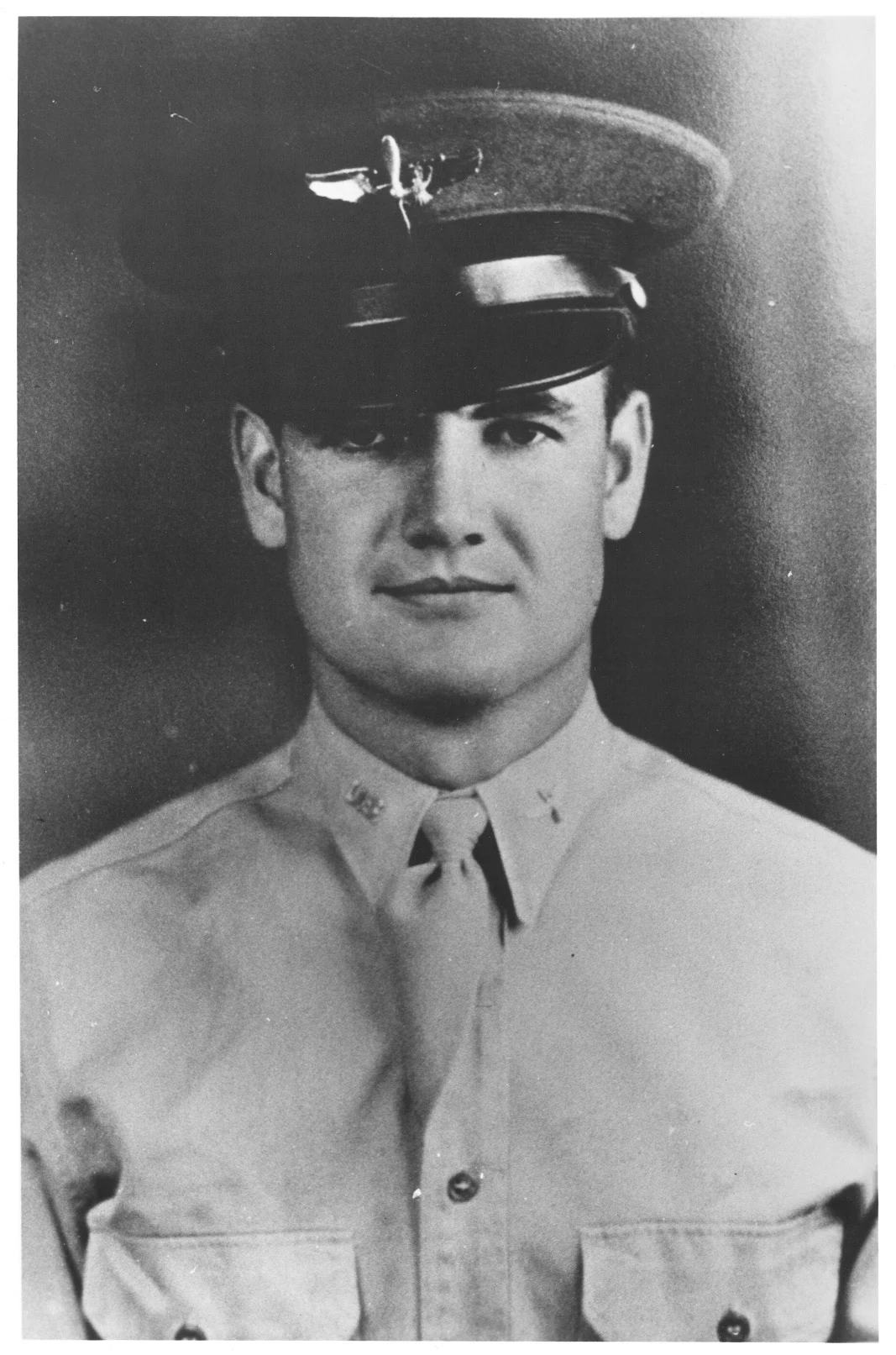
On December 20, 1944, First Lieutenant George McGovern piloted his B-24J Liberator bomber “Dakota Queen” on a mission to bomb the Skoda Ammunition Works in Pilsen, Czechoslovakia. It was his eleventh combat mission. He was 22 years old.
An hour before the target, engine No. 2 quit. McGovern feathered the prop and pressed on with three engines. After dropping his bombs, engine No. 3 was hit and caught fire. The formation sped away while the crippled Dakota Queen limped home, losing about 100 feet every minute.
Navigator Sam Adams plotted a course along the Yugoslav coast. The crew threw out everything they could — guns, ammunition, oxygen tanks, flak suits — anything to lighten the plane. When they came out over the Adriatic, they were down to 6,000 feet.
And then a minor miracle. Dead ahead appeared the island of Vis.
The crew had been briefed about a British fighter strip on the island — a dirt runway used for Spitfires, just 2,400 feet long. A B-24 requires 5,000 feet for a safe landing.
McGovern set the wheels down at the very end of the runway, using every inch of flaps. Then he slammed on the brakes. The tires screeched and smoked with the effort — and another little miracle: the flames in No. 3 engine went out with the suddenly reduced flow of air.
The big plane lurched to a halt only a few feet from the end of the cleared dirt. Dead ahead were rocks and the start of a sharp incline. A British foam truck was already spraying the smoldering engine.
All ten crew members walked away safely. Half of them threw themselves on the ground and kissed it, while McGovern and co-pilot Bill Rounds hugged each other. The next day, a C-47 transport picked them up and returned them to base.
Early Life
George Stanley McGovern was born on July 19, 1922, in Avon, South Dakota, and grew up in the small town of Mitchell. He was the son of Reverend Joseph C. McGovern, a Methodist minister, and Frances McLean. The family was very poor.
He graduated from Mitchell High School in 1940 as a skillful debater, earned his civilian pilot’s license in 1941, and enlisted on July 31, 1942. He married Eleanor Stegeberg on October 31, 1943, and named all his bombers “Dakota Queen” after her.
McGovern joined the 741st Bomb Squadron at San Giovanni Airfield, Italy in September 1944. His first mission was on November 11, 1944. He flew 35 credited combat missions totaling 230 hours of combat time.
Honors
For his handling of the crippled Dakota Queen and safe landing at Vis, McGovern was awarded the Distinguished Flying Cross on May 7, 1945. He also received the Air Medal with three Oak Leaf Clusters and the World War II Victory Medal.
Post-War Legacy
After the war, McGovern graduated magna cum laude from Dakota Wesleyan University, earned a Ph.D. from Northwestern, and entered politics. He served as a U.S. Representative, U.S. Senator from South Dakota (1963–1981), and was the Democratic presidential nominee in 1972. He dedicated much of his later life to fighting world hunger and received the Presidential Medal of Freedom in 2000.
McGovern returned to Vis in August 1977 to visit the site of his emergency landing. He died on October 21, 2012, at age 90.
